How to Clean Wooden Furniture and Keep It Looking New
12 designs Wood and care guides Checked 9 Oct 2026
Knowing how to clean wooden furniture the right way keeps it looking new for decades, even through Indian monsoons and dusty summers. Most of the work is simple: a soft cloth, a little mild soap, and the habit of wiping spills straight away.
This guide covers how to maintain wooden furniture week by week, how to polish it at home, what to do about fungus and termites, how to fix water rings and scratches, and how to paint or pack it for a move. For help choosing pieces that are easier to look after, read our wood and board guide or browse the furniture gallery.
How to Clean Wooden Furniture at Home
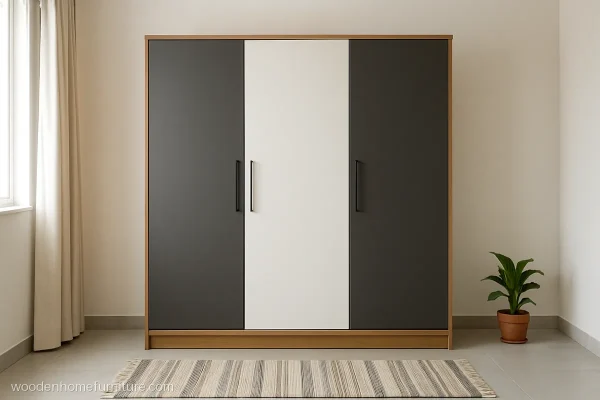
Gentle, regular cleaning beats any deep clean. Match the method to the finish, because polished solid wood, laminate and PU each like slightly different care. Laminate shutters like those in our wardrobe laminate gallery need the least fuss.
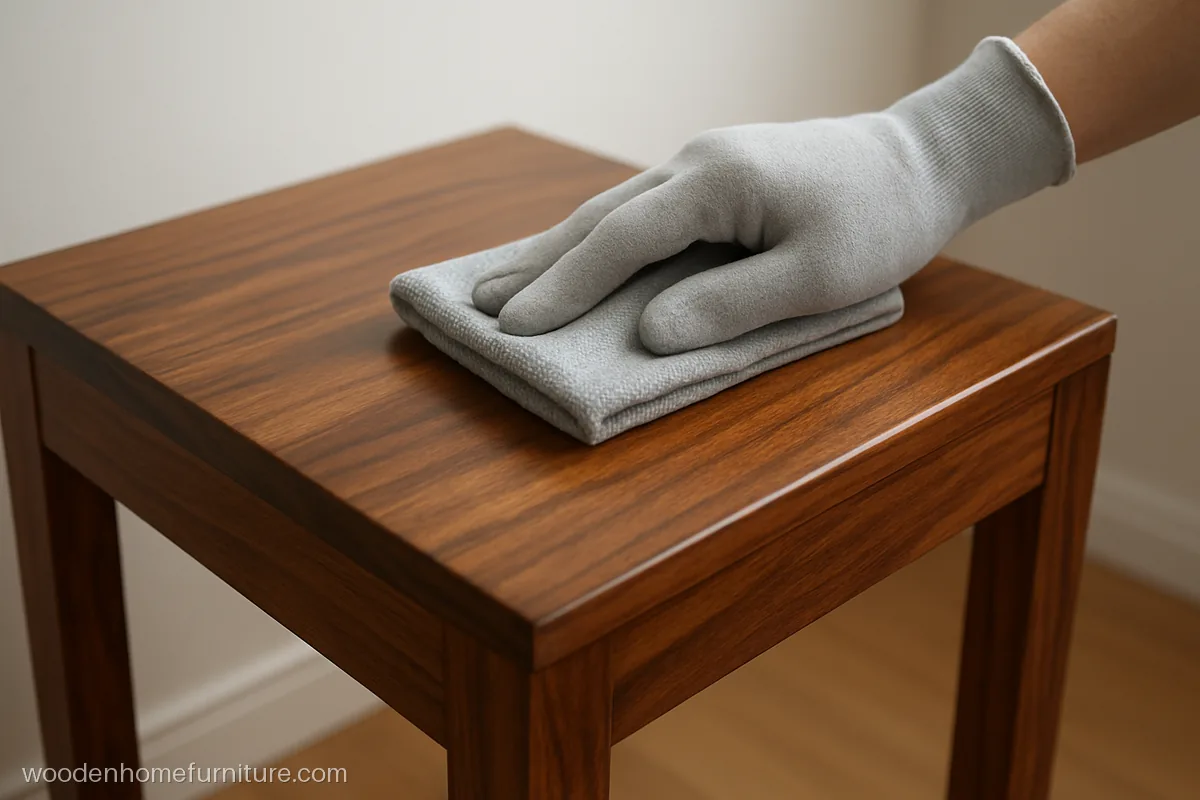
Dry dusting once a week is the single best habit. A folded microfibre cloth lifts fine dust without the grit that scratches polish when you rub hard.
- MaterialSheesham, melamine
- SizeWeekly, 2 minutes
- FitsAll polished wood
Carpenter tip: Fold the cloth into a pad and wipe along the grain, never in circles, to avoid swirl marks.
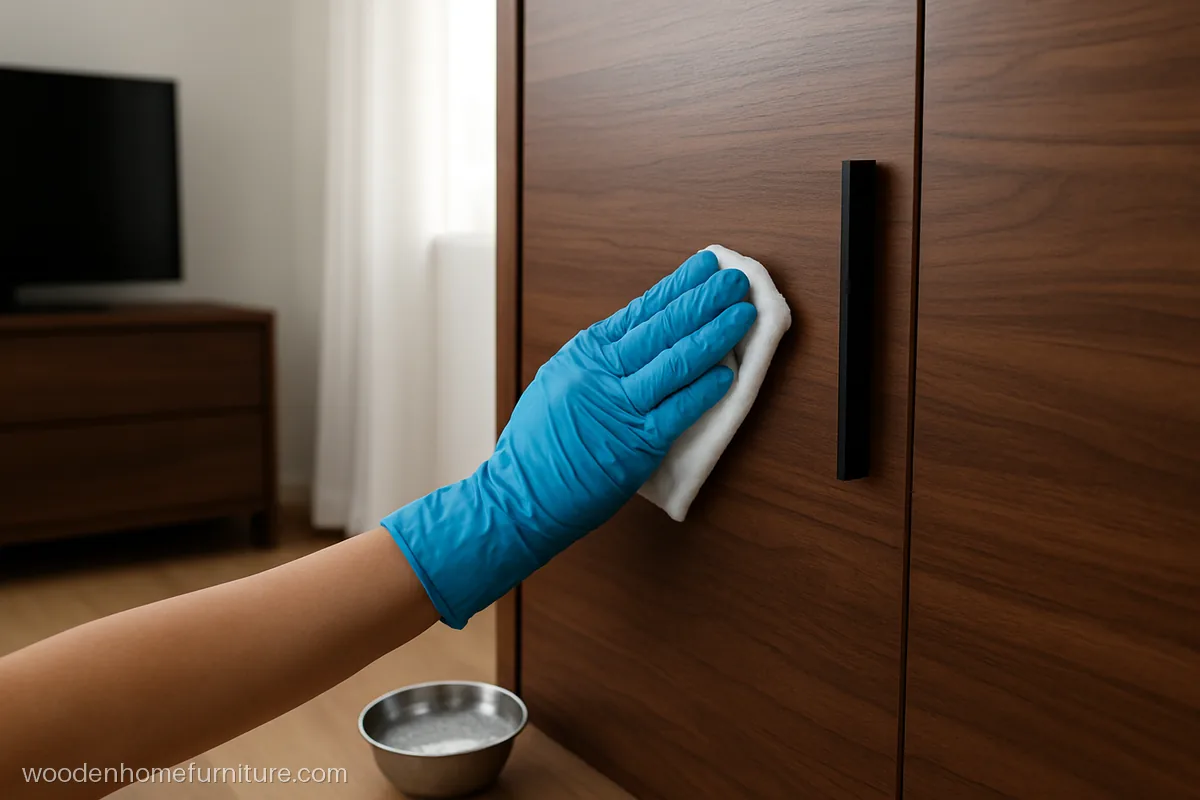
Laminate and PU shutters handle a damp wipe well. Use a cloth wrung almost dry in mild soap water, then a dry cloth, with extra care around the handles.
- MaterialPly, walnut laminate
- SizeEvery 2 weeks
- FitsWardrobes, TV units
Carpenter tip: Keep water off the bottom edge and hinges; edge banding can lift if water sits there.
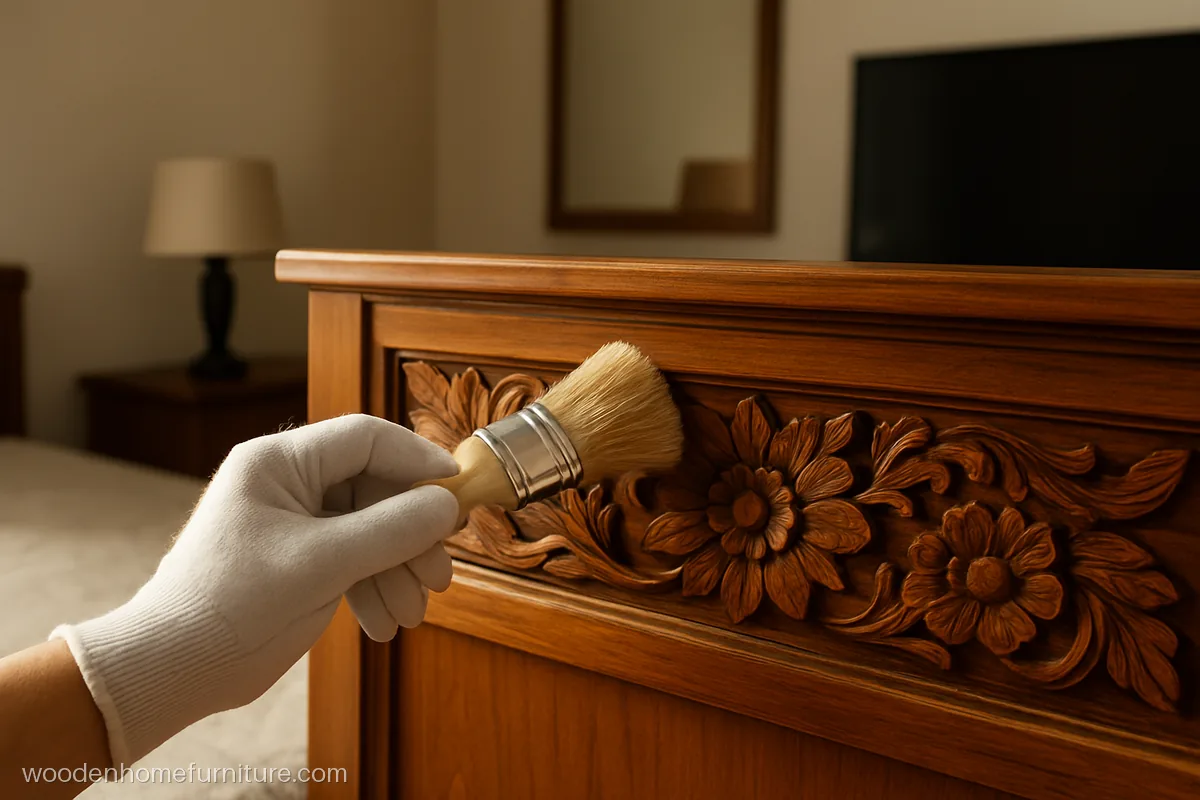
Carved panels trap dust that a cloth cannot reach. A dry, soft paint brush flicks it out of every groove before you wipe the flat parts.
- MaterialTeak, wax polish
- SizeMonthly
- FitsCarved beds, chests
Carpenter tip: Keep one soft 2 in brush only for furniture, and never use a wet brush on carving.
How to Polish Wooden Furniture at Home
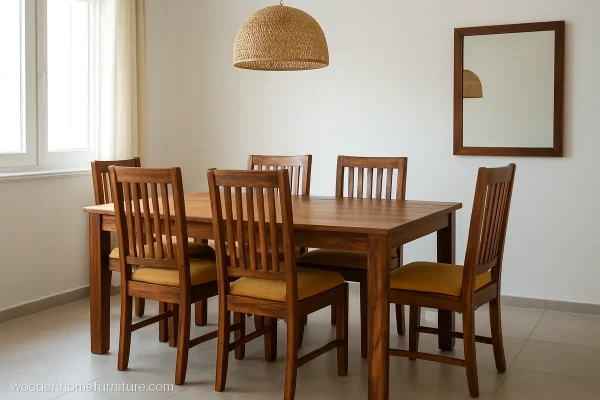
Polish feeds and protects solid wood and veneer. Light wax or oil can be done at home, while a full melamine or PU polish is a job for a trained polisher. Our wooden dining tables are the pieces that need polish most often.
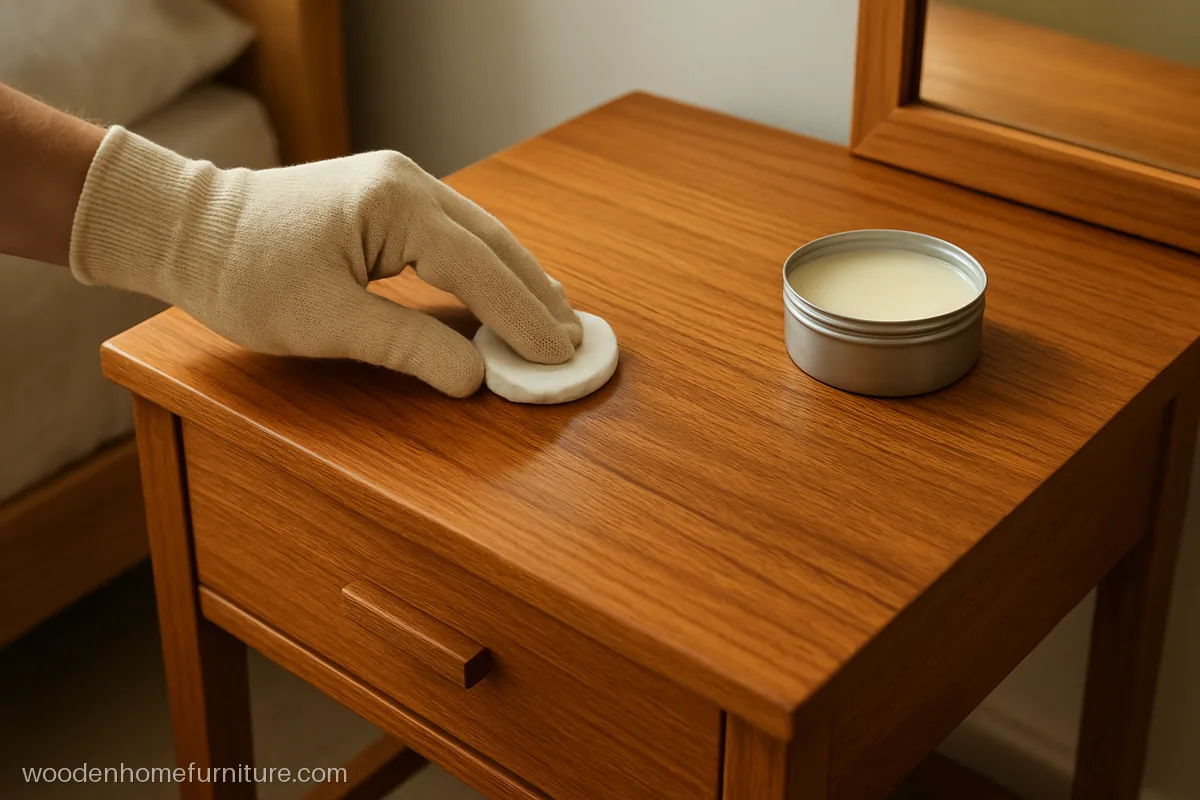
A thin coat of paste wax every few months fills fine scratches and gives a soft glow. Rub it in small sections, let it haze, then buff.
- MaterialTeak, paste wax
- SizeEvery 3 to 4 months
- FitsTeak and sheesham
Carpenter tip: Use very little wax; a thick coat stays sticky and collects dust in humid weather.
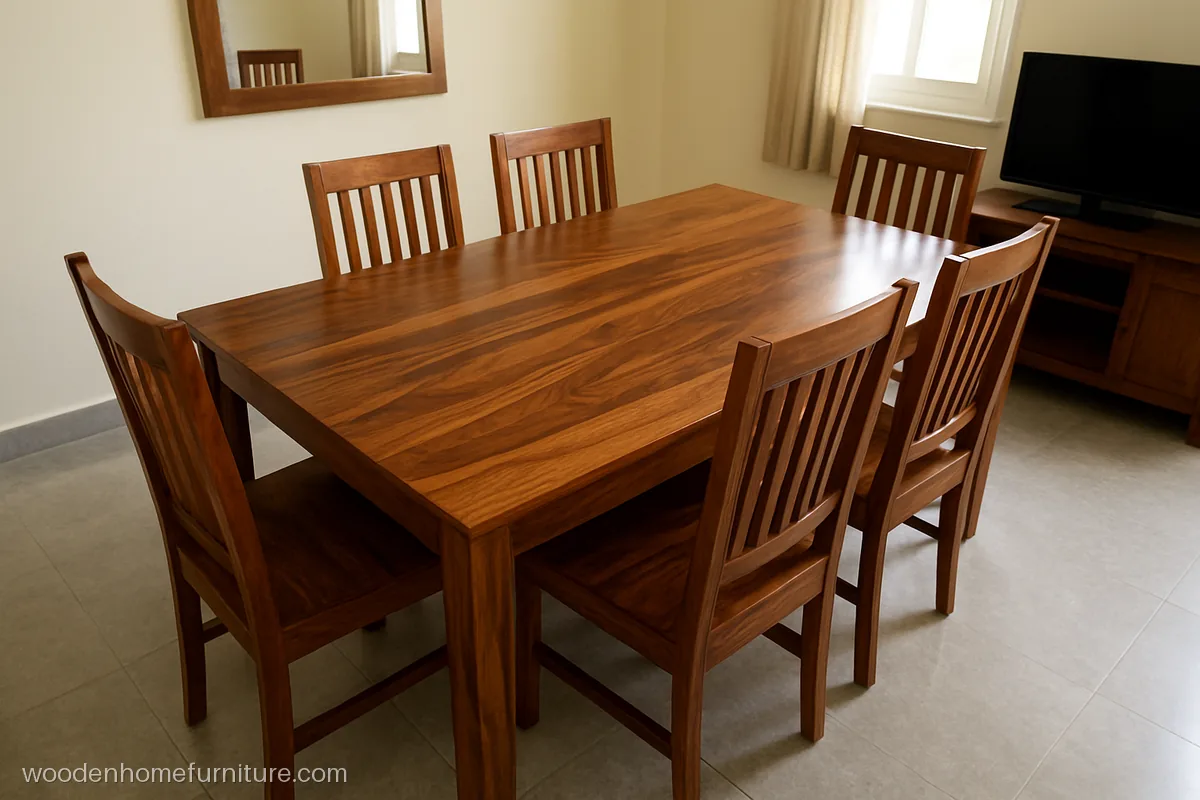
A fresh melamine polish by a professional seals a dining top against water and heat for a year or two. Wait three days before using it fully.
- MaterialSheesham, melamine
- Size6 seater top
- FitsDaily use dining table
Carpenter tip: Ask the polisher to sand with 320 grit between coats and keep the room dust free while it dries.
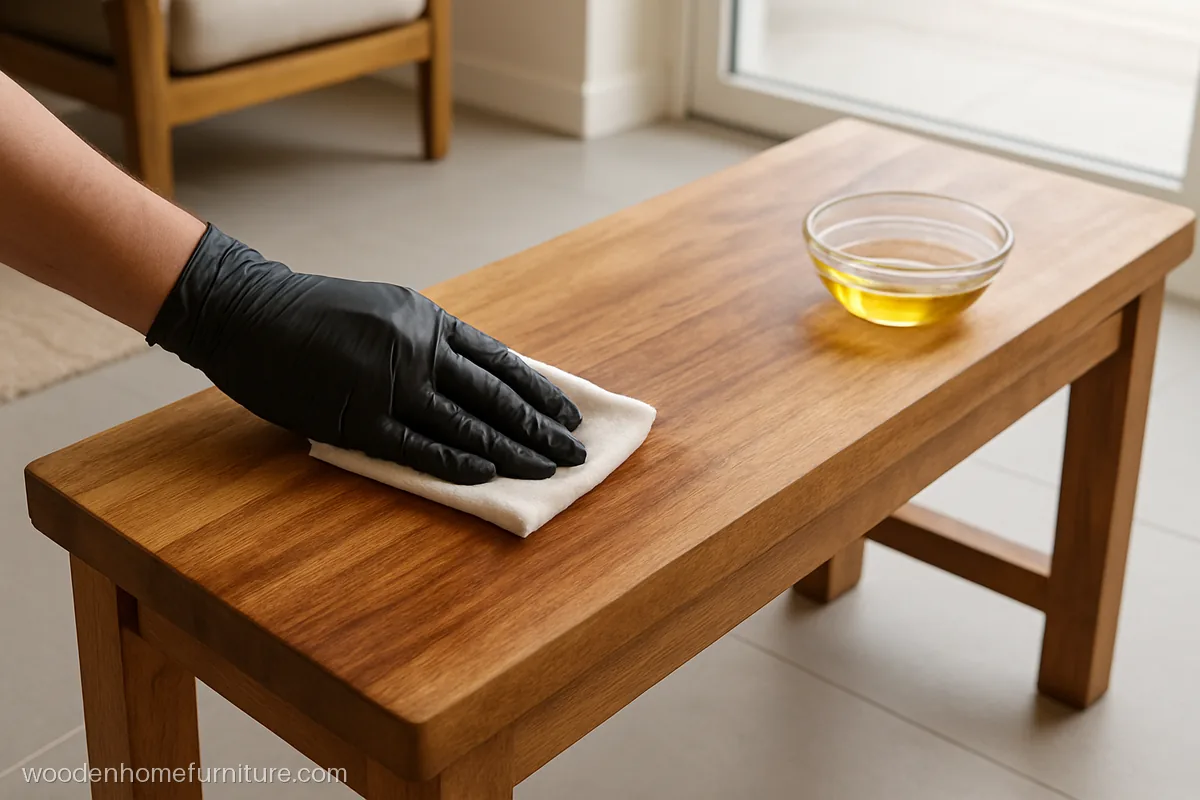
Oil finished pieces like this mango wood bench drink in a thin coat of furniture oil when they look dry. Wipe off the extra after twenty minutes.
- MaterialMango wood, oil finish
- SizeTwice a year
- FitsOil finished pieces
Carpenter tip: Spread oily rags flat to dry outdoors before throwing them away, since bunched rags can heat up.
Fungus on Wooden Furniture and Termite Damage
The monsoon brings two enemies: fungus that grows on damp surfaces and termites that eat wood from the inside. Catch both early and they are easy to stop. Raised designs, like many in our box bed gallery that sit on legs, are easier to keep dry.
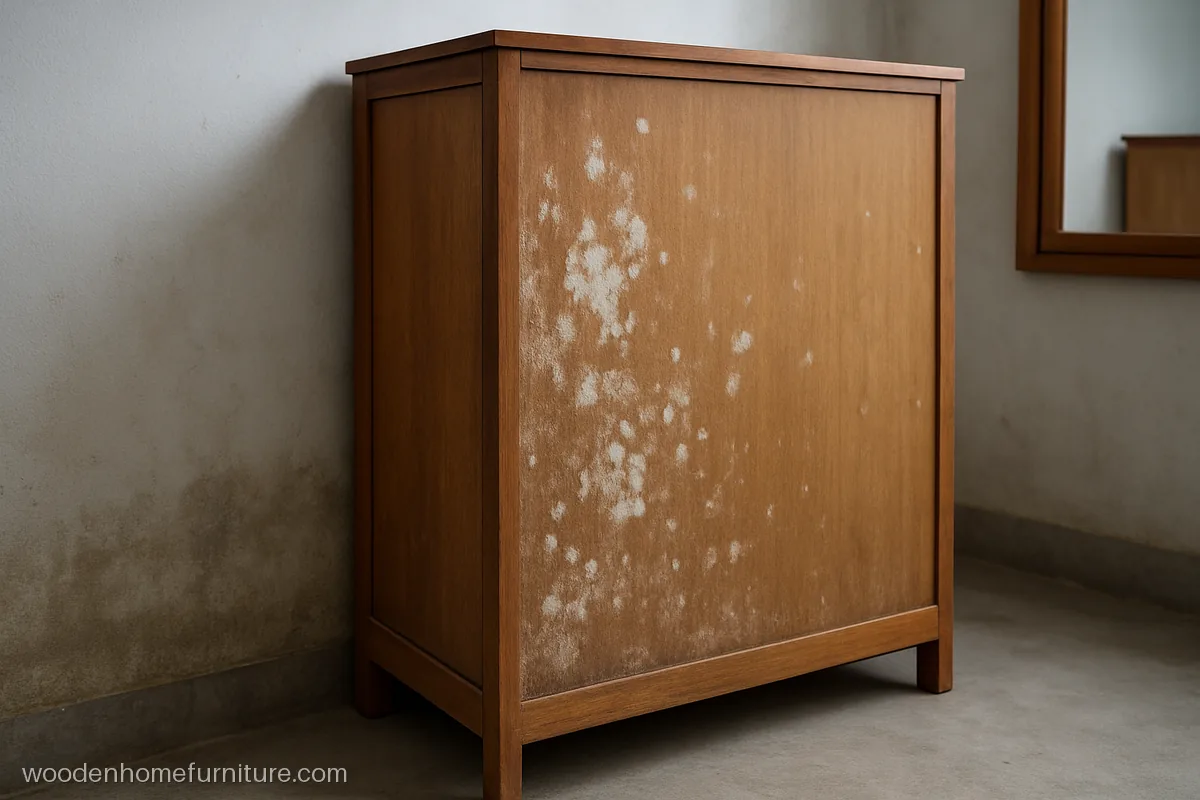
White powdery spots on the back or inside of an almirah mean trapped damp. Clean them on a dry day, air the piece out and move it off the wall.
- MaterialPly back, natural polish
- SizeCheck monthly in rains
- FitsAlmirahs on outer walls
Carpenter tip: After cleaning, leave the doors open in daylight for a few hours and fix 2 in spacers behind.
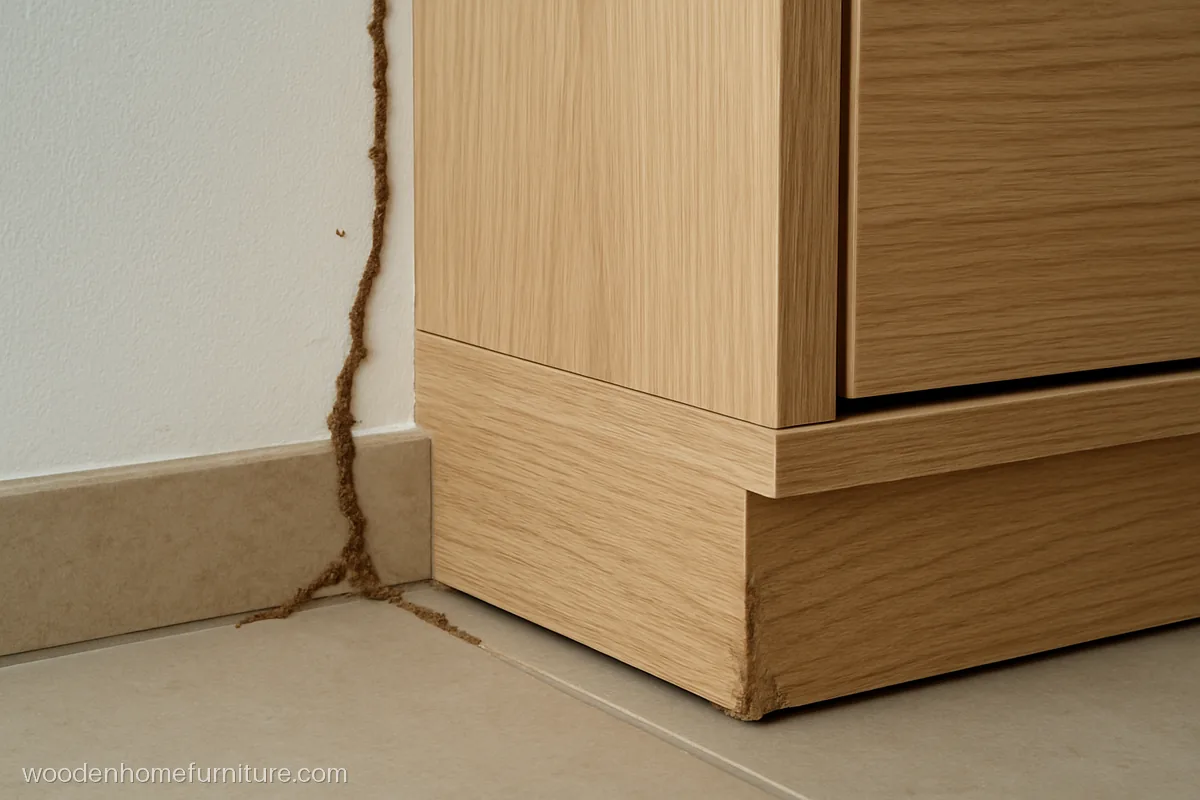
Thin mud tubes climbing a wall or skirting are the clearest warning of termites. Do not just break them and spray; call a pest control professional the same week.
- MaterialPly skirting, laminate
- SizeInspect every quarter
- FitsGround floor homes
Carpenter tip: Ask for a lift-off skirting strip so you can look behind it during inspections.
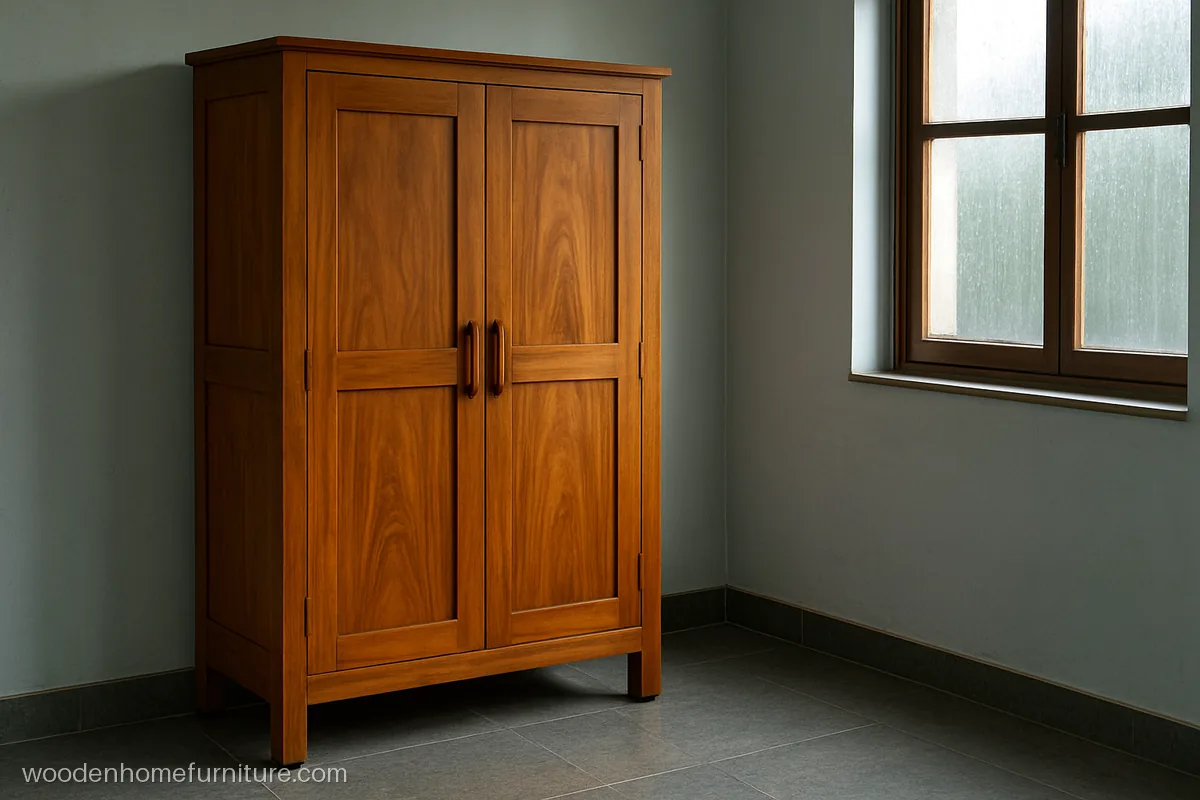
Two or three inches of air behind an almirah and rubber feet under it stop damp from creeping into the wood. It is the cheapest monsoon protection there is.
- MaterialTeak, natural polish
- Size2 to 3 in wall gap
- FitsMonsoon prone rooms
Carpenter tip: Use solid rubber or nylon feet at least half an inch thick under every leg on a stone floor.
Water Rings, Paint and Moving Day Care
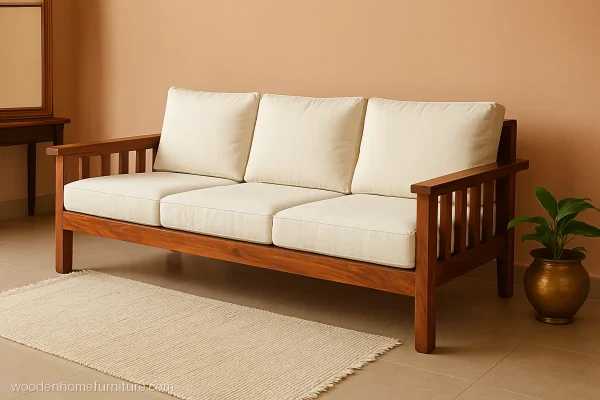
Everyday accidents and big changes, like a fresh coat of paint or shifting house, need their own care. Here is how to handle each one. Our wooden sofa set page shows pieces with removable legs that travel well.
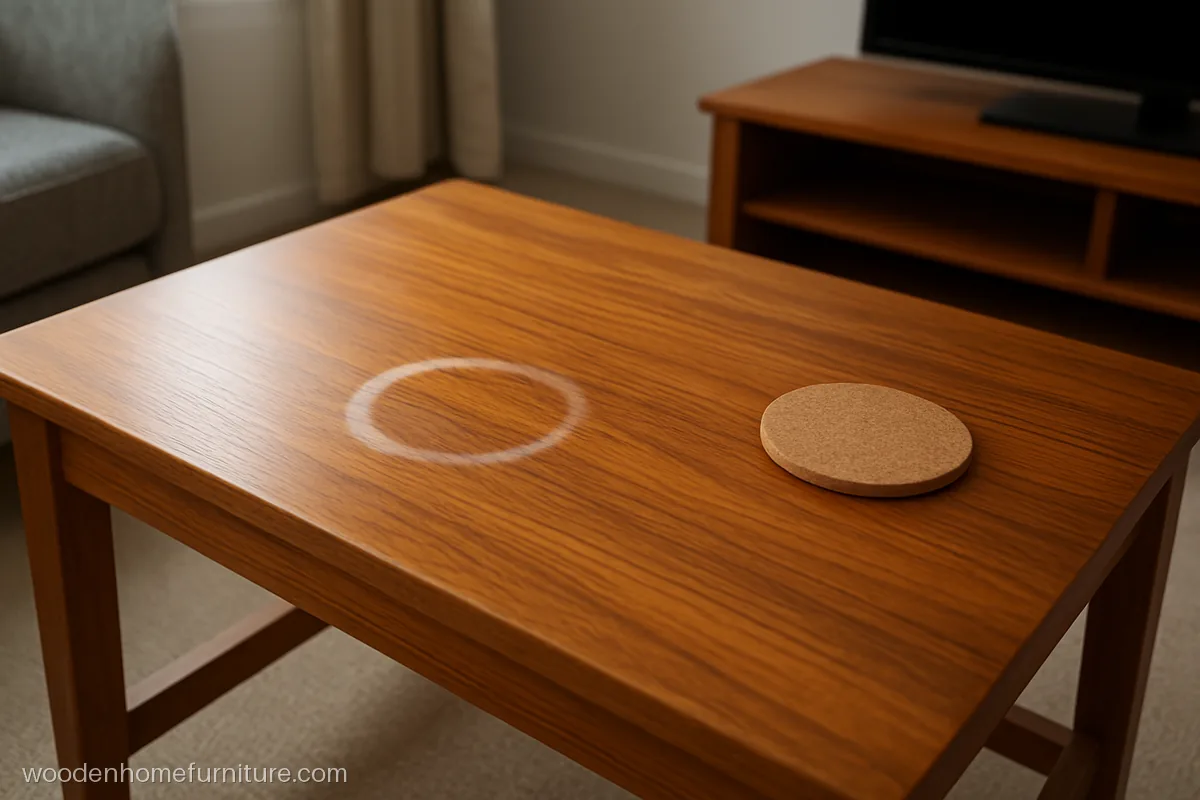
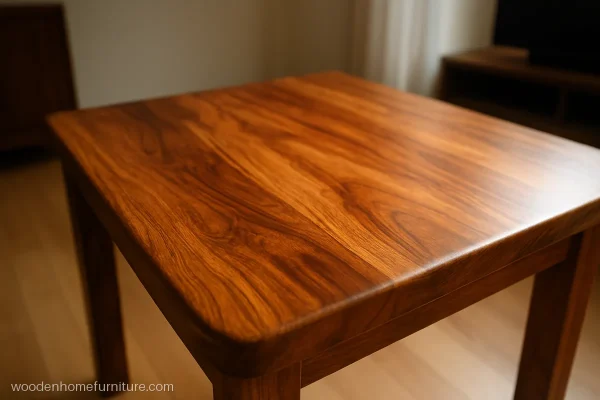
A white ring means moisture is trapped in the polish, not in the wood. It often fades with gentle warmth and a little wax, as explained below.
- MaterialTeak, melamine polish
- SizeSmall ring, 3 in
- FitsCentre and side tables
Carpenter tip: Treat white rings within a day or two; dark rings mean water reached the wood and need a polisher.
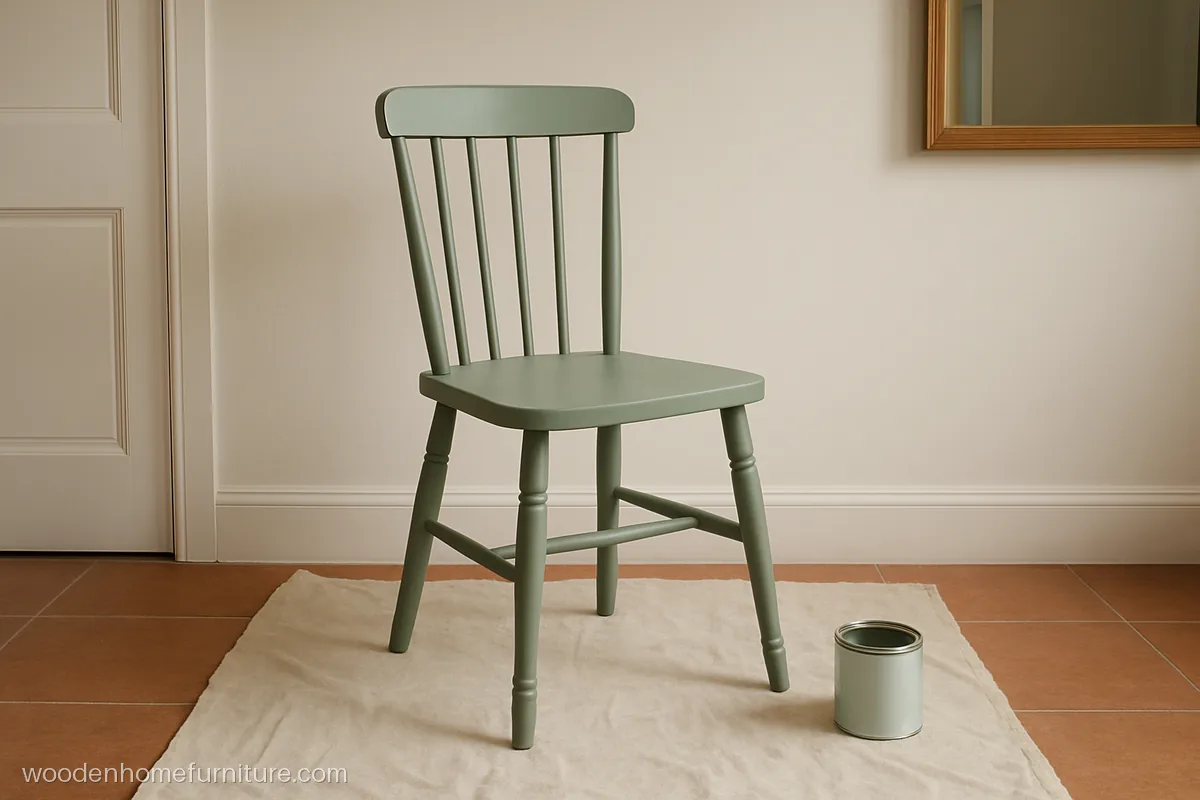
A tired rubber wood chair gets new life with sanding, primer and two coats of water based enamel. Paint suits pieces with plain grain or old damage.
- MaterialRubber wood, enamel
- SizeSingle chair
- FitsKitchen or study
Carpenter tip: Sand with 120 then 220 grit, wipe off the dust, and always use a wood primer before the colour coat.
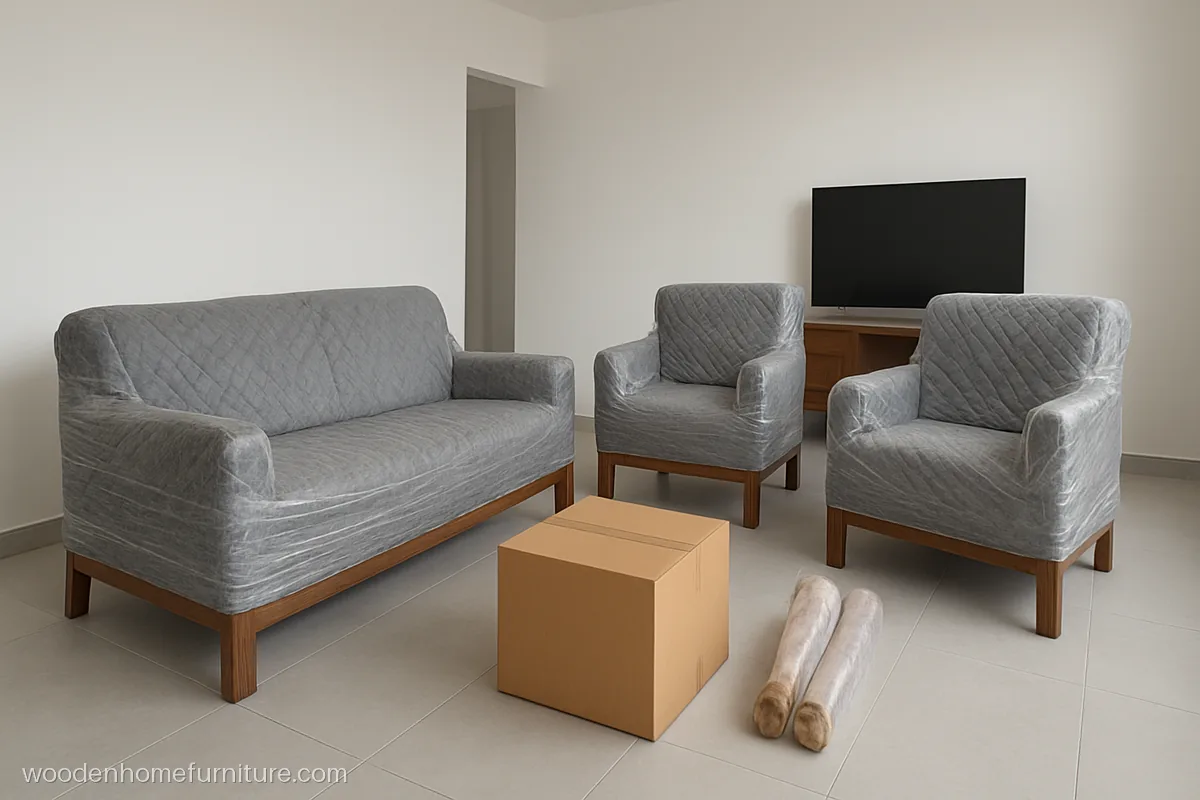
For a move, wrap polished wood in soft blankets first and plastic film on top, never tape straight on the polish. Remove legs and pack them separately.
- MaterialSheesham, blanket wrap
- Size3 seater + 2 chairs
- FitsHouse shifting
Carpenter tip: Empty every drawer and tape it shut over the blanket, not on the wood, so it cannot slide out.
Wooden Furniture Cleaner: What to Use and What to Avoid
You do not need costly bottles. A good wooden furniture cleaner is often just a few drops of mild liquid soap in a mug of warm water, used sparingly.
- Safe to use: soft cotton or microfibre cloths, mild soap water, a soft paint brush for carving, and diluted white vinegar (1 part to 4 parts water) for greasy smudges on laminate.
- Avoid: detergent powder, bleach, phenyl, ammonia glass cleaner, steel scrubbers and kerosene. They eat through polish and dull laminate gloss.
- Skip silicone sprays on wood you plan to re-polish, because fresh polish will not stick over them.
Here is how to clean wooden furniture at home without harming the finish:
- Clear everything off the top.
- Dry dust along the grain with a soft cloth.
- Dip a second cloth in soap water and wring it until it is barely damp.
- Wipe one small area at a time.
- Follow straight away with a dry cloth so no water sits on the surface.
- Let it air dry for ten minutes before putting things back.
How to Polish Wooden Furniture at Home, Step by Step
The right wooden furniture polish depends on the original finish. Always test any polish for wooden furniture on a hidden spot, such as the back of a leg, before you start.
- Paste wax: suits most polished solid wood and veneer, and is easy to apply at home.
- Furniture oil: for matte, oil finished pieces like mango or teak benches.
- Melamine and PU polish: hard and water resistant, sprayed or padded on by a professional.
- Natural (shellac) polish: warm and traditional, but easily marked by water and heat.
To wax a table at home:
- Clean and dry the surface as described above.
- Take a pea sized bit of wax on a cotton pad.
- Rub it into a small area in gentle overlapping strokes.
- Wait 10 to 15 minutes until it turns slightly hazy.
- Buff along the grain with a clean soft cloth until it glows.
- Add a second thin coat on dining tops that see daily use.
Wood polish for furniture cannot fix a finish that has worn through to bare wood. When you see grey, dry patches or deep scratches, call a polisher for a full re-polish. Doing this every 1 to 2 years keeps solid wood sealed against damp.
Monsoon Care: Fungus and Anti Termite Treatment for Wooden Furniture
Fungus shows up as white or greenish powdery spots, often on the back of almirahs, inside drawers and under beds. Deal with it like this:
- Wait for a dry day and open the piece fully. Wear a mask.
- Brush off loose spores outdoors or near an open window.
- Wipe with diluted white vinegar or mild soap water on a barely damp cloth.
- Dry with a clean cloth and let a fan run on it for a few hours.
- Once fully dry, apply a thin coat of wax to polished surfaces.
If the fungus keeps coming back, the wall behind is the real problem. Fix the seepage and keep a 2 to 3 in gap behind the furniture.
Termites are more serious. Look for thin mud tubes on walls, a hollow sound when you knock on wood, tiny holes, fine powder or blistered laminate. If you see any of these, do not wait. Professional anti termite treatment for wooden furniture usually means injecting chemical into the damaged wood and treating the floor and wall joints around it. For new built-in units, ask your carpenter to treat the wall and floor before fixing them. Our wardrobe design page shows units with raised skirtings that make checks easier.
Fixing Scratches and Water Rings
Most marks look worse than they are. Try the gentlest fix first.
- White water rings: set a hair dryer on low, hold it about 6 in away and keep it moving over the ring for a few minutes. Once it fades, rub in a little paste wax.
- Dark rings: water has reached the wood itself. This needs light sanding and re-polish by a professional.
- Fine scratches on dark wood: rub a matching wax filler stick along the scratch, then buff.
- Deeper scratches: use a furniture touch-up marker in the closest shade, let it dry, then wax over it.
- Chipped laminate: fill with laminate repair paste in a matching colour, and press down any lifting edge banding with contact glue.
- Heat marks from hot dishes: treat like white rings, and use thick mats from now on.
For sticky drawers after the rains, rub a candle along wooden runners or ask for telescopic channels to be fitted.
Paint for Wooden Furniture and Moving Day Care
Paint is a good choice for old pieces with plain or damaged grain. Wood paint for furniture comes in a few types:
- Water based enamel: low smell, dries quickly, easy for a home job.
- PU paint: the toughest finish, best sprayed by a professional.
- Chalk style matte paint: soft vintage look, needs a wax or clear coat on top.
How to paint wooden furniture at home:
- Remove handles and clean off grease with soap water.
- Sand with 120 grit, then 220 grit, and wipe away all dust.
- Apply one coat of wood primer and let it dry fully.
- Apply two thin coats of colour, sanding lightly between them.
- Wait at least two days before heavy use.
When shifting house, empty every drawer, remove legs and glass shelves, and wrap each piece in blankets before any plastic film. Keep tape off polished surfaces, carry tall almirahs upright, and never leave wrapped wood on a wet floor or in a rainy truck overnight. Unwrap within a day so trapped moisture cannot mark the polish.
Questions people ask
How do I clean wooden furniture without damaging the polish?
Dust with a dry microfibre cloth, then wipe with a cloth that is barely damp with mild soap water and dry it at once. Never pour water on the surface or use detergent, bleach or phenyl.
What is the best polish for wooden furniture at home?
A clear paste wax is the easiest and safest for most polished solid wood and veneer. Use furniture oil only on pieces that already have an oil finish. Leave melamine and PU polish to a trained polisher.
How do I remove white fungus from wooden furniture?
On a dry day, brush off the spores, wipe with diluted white vinegar or mild soap water, and dry the piece with a fan. Then wax it and move it a few inches away from the damp wall so it does not come back.
How often does wooden furniture need anti termite treatment?
Get a professional inspection once a year, and treatment as soon as you see mud tubes, powder or hollow sounding wood. Ground floor homes and houses near gardens need checks more often, ideally before and after the monsoon.
Can I paint old wooden furniture myself?
Yes. Sand it, use a wood primer and finish with two thin coats of water based enamel. Work in a well aired room, and leave antique or carved solid wood pieces to a polisher instead.
Do I need a special wooden furniture cleaner?
Usually not. Mild soap in warm water and soft cloths handle daily cleaning. A store bought cleaner is fine if it is labelled safe for polished wood and has no silicone or ammonia.